The whole area of the northern Netherlands served military purposes; in the Second World War the priority was securing the country’s naval defence. So it’s no surprise that you’ll see plenty of former military buildings, transmitters, ships and even a full-size submarine on display (and it is seriously big).

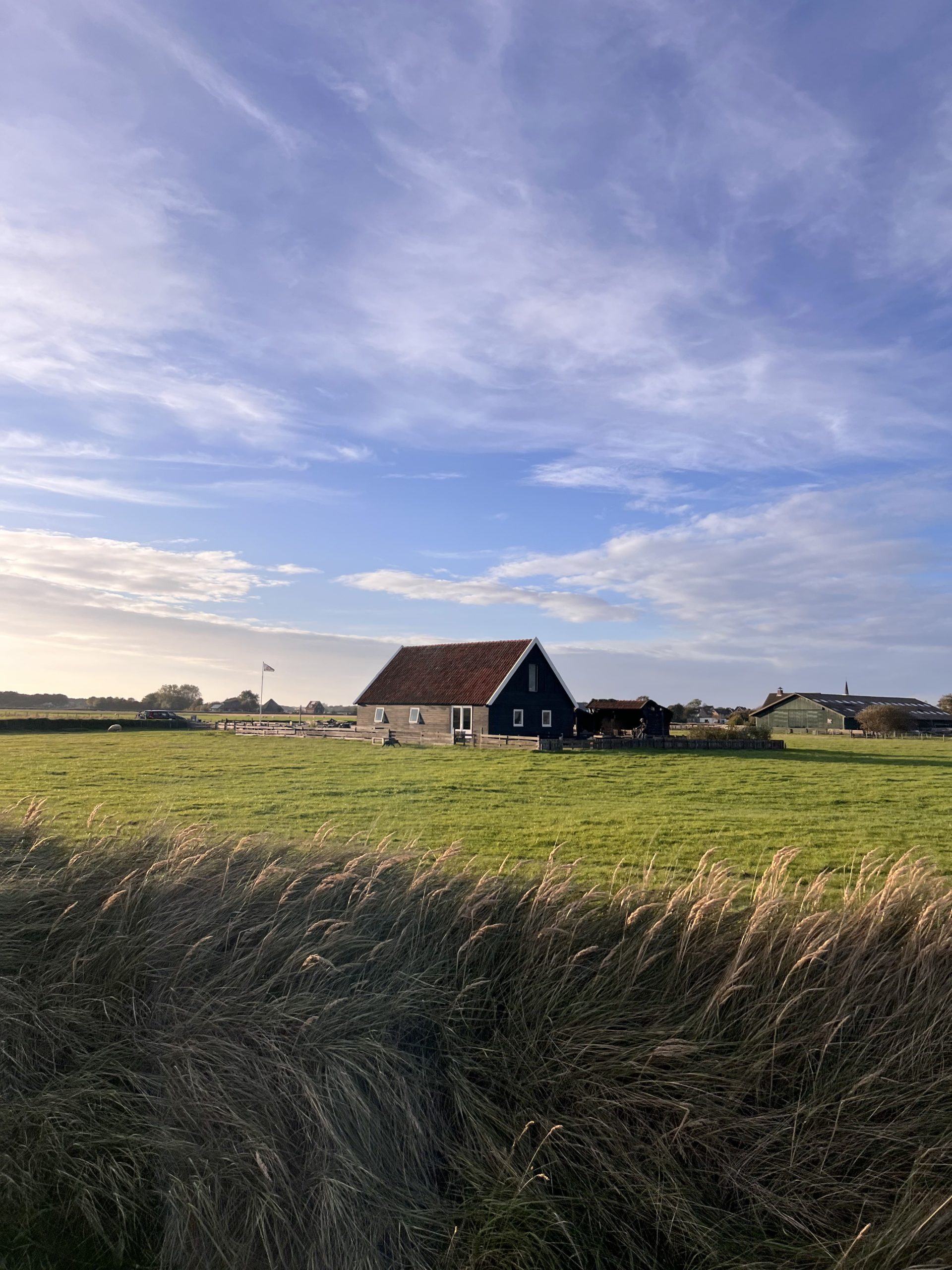
Texel is part of the West Frisian Islands and lies about 100 km north of Amsterdam. The island is roughly 25 km long, but even so it fits in more than 30 km of beaches, nature reserves and villages where life runs slowly. Texel is popular above all with the Dutch, who escape here from the bustle of the big city. And no wonder – the combination of nature, sea, flat land, tulip fields and calm is simply perfect.
How to get to the island of Texel
If you set off early in the morning you can also visit the Navy Museum in Den Helder and soak up the atmosphere of the place. You have to go to Den Helder anyway. A ferry leaves the local harbour every half hour for Texel, roughly 20-25 minutes away. The ferry departs to the minute. Yes, to the minute. If you’re driving you can park in the port area, or at a hotel car park a few hundred metres away that’s free.
A return ticket costs 2.50 €. You don’t need to buy any other ticket. There’s only one way back off the island. Yes, the same one you came on. The crossing is beautiful in good weather. On board you can get refreshments of just about any kind. The buffet is taken over by children and adults within minutes, so get in quickly.
You can of course take your car with you. A return ticket (car + 2 people) comes to between 30 and 50 € depending on which day you sail.
How best to enjoy the atmosphere of Texel
The island of Texel is roughly 55 km around. Are you a keen walker? Walk north to the lighthouse. You’ll get the sea, the wind and the sand dunes. You can take the coastal route or go through the middle of the island via the “capital”, Den Burg.
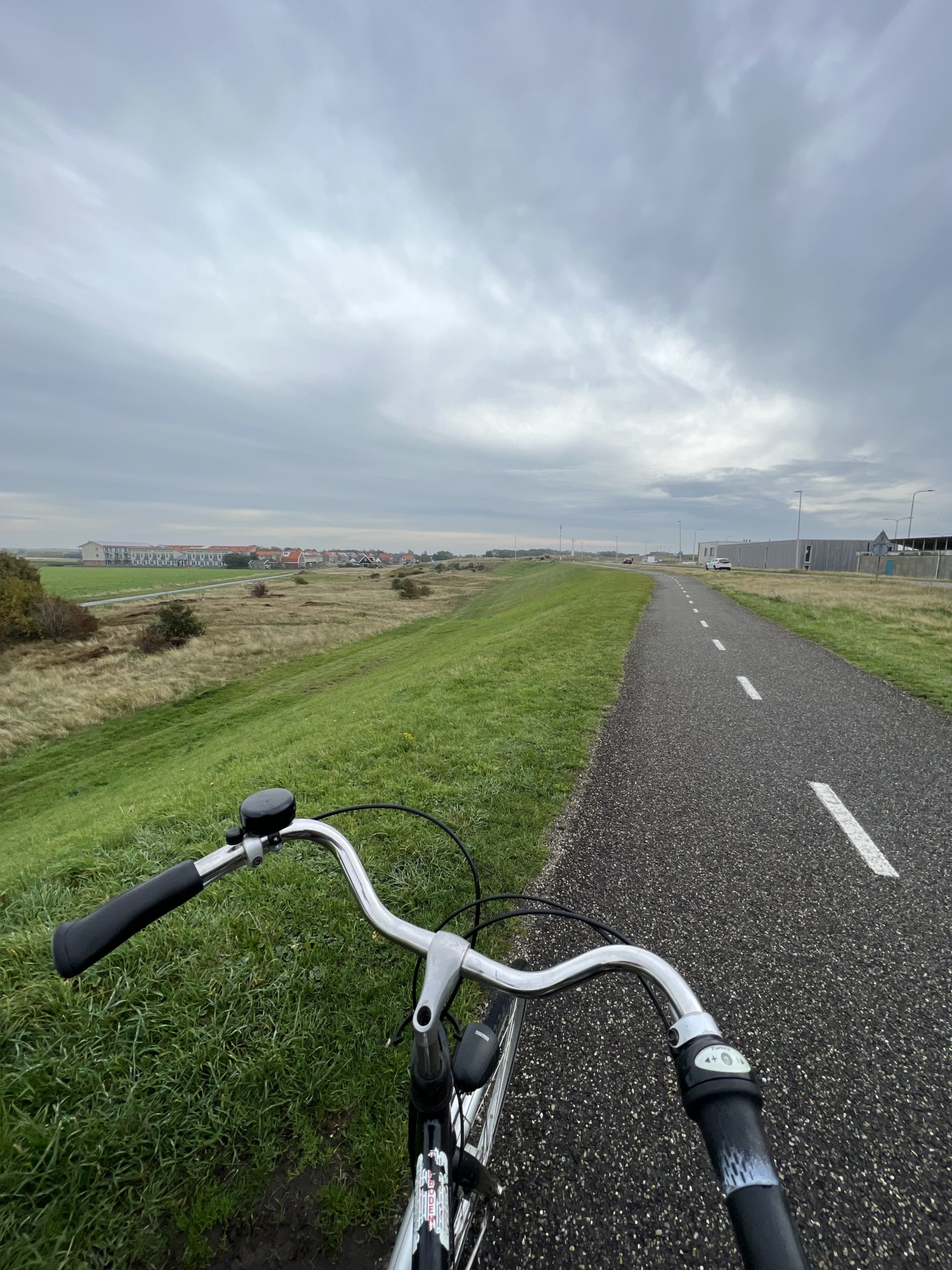
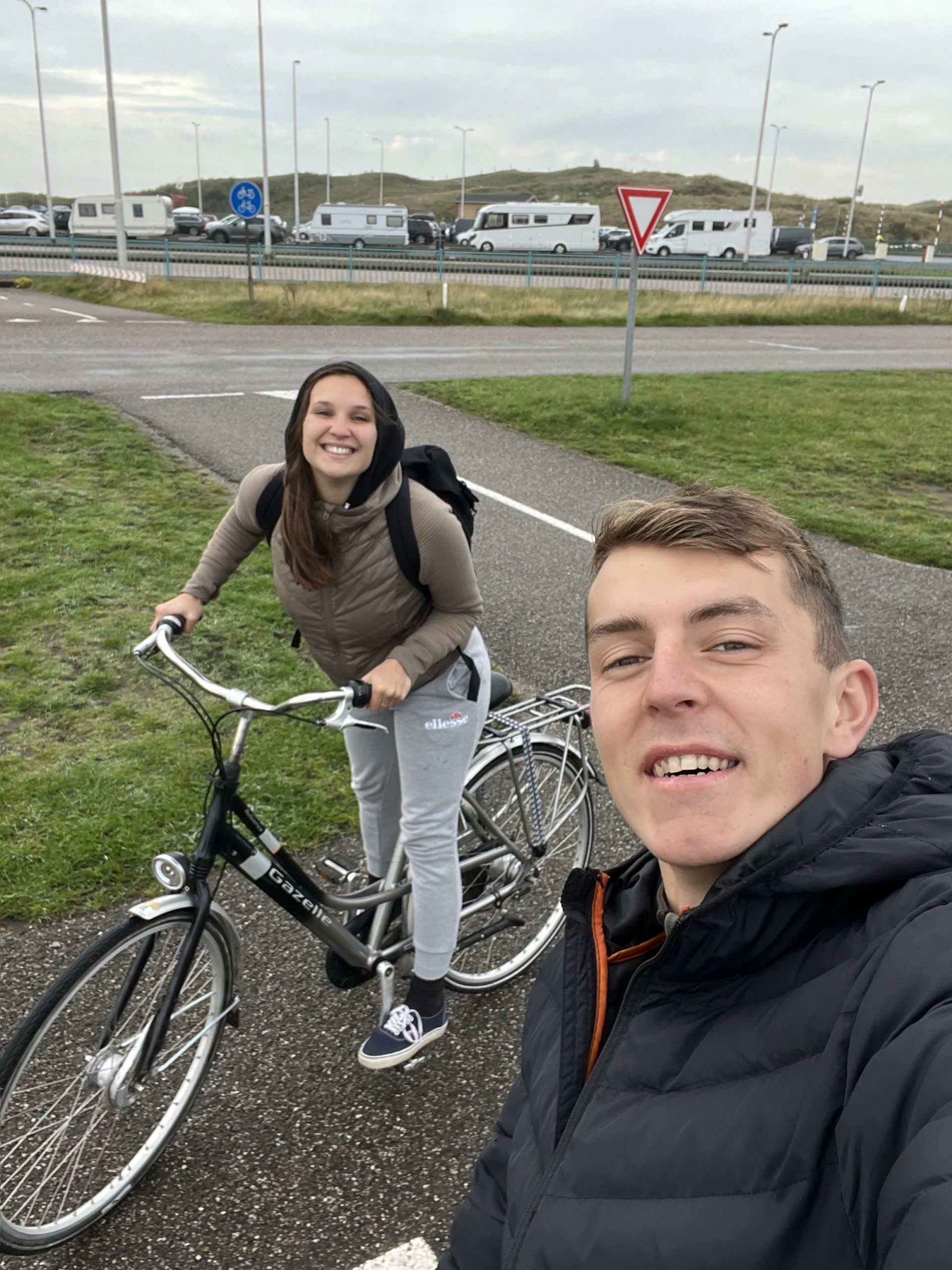
Like cycling but don’t have a bike? No problem. Texel has a network of more than 140 km of cycle paths that lead you through the dunes, the villages and along the sea. As soon as you step off the ferry there’s a bike rental on your right (you can’t miss it – it’s marked with a huge bicycle). A typical Dutch bike with ordinary pedals will cost you 12.50 € for a day. Prefer to take in the views, ideally without sweating or straining? An e-bike will cost you 24.50 €. Either way, both options are very kind on the wallet.
If you’d rather have a guided trip, we have very good experience with tours through GetYourGuide.
Discovering the island of Texel with a native guide
Along the way we soaked up the sun, the lapping sea, smiles exchanged with other cyclists and walkers, and simply enjoyed the atmosphere. We didn’t forget refreshments, of course. Like proper tourists we had a Pilsner in the backpack, which anyone would happily drink in the sunshine on an endless flat road.
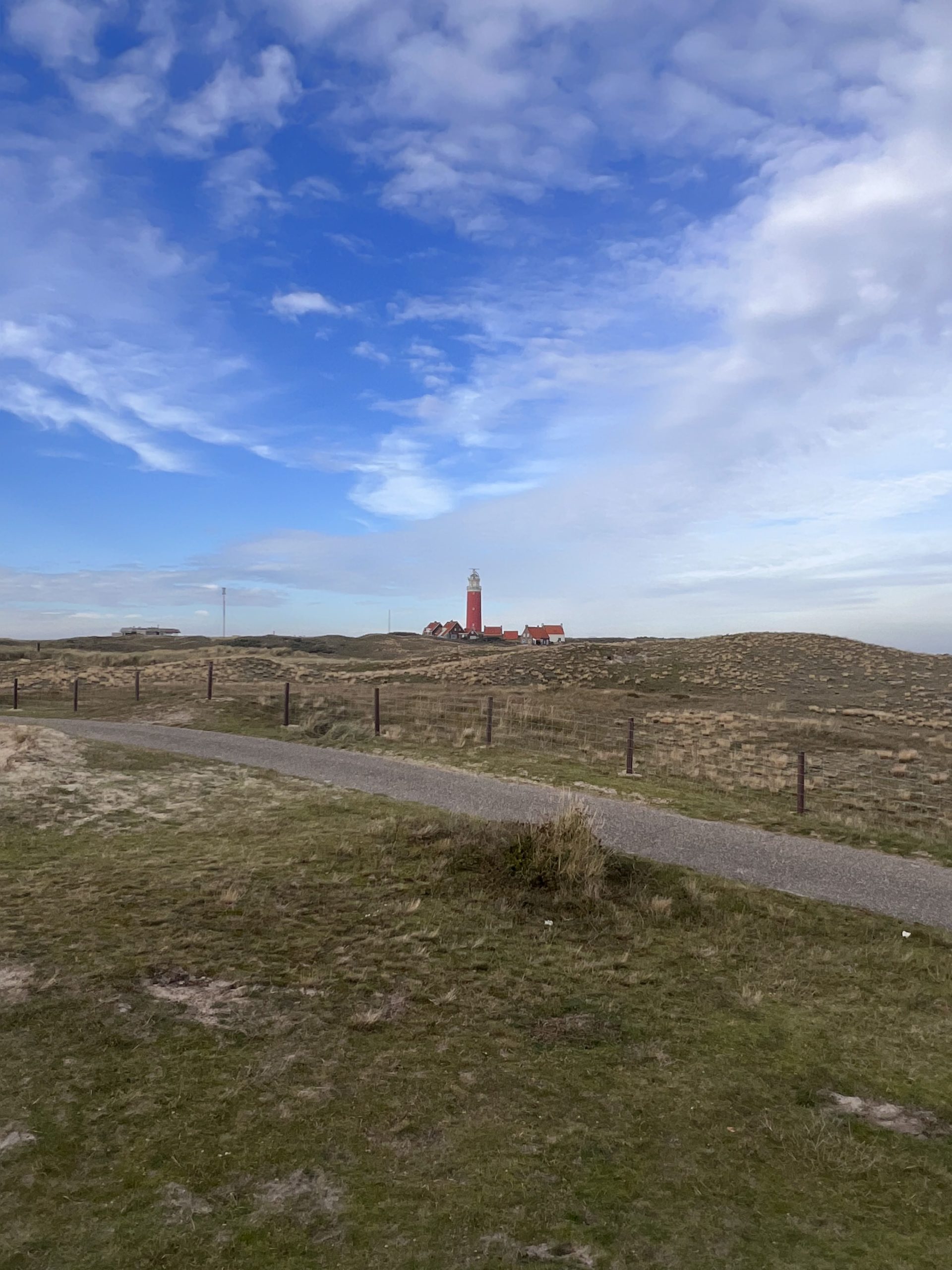
The Eierland lighthouse
We set off from the ferry around the edge of the island. We went up the right-hand shore (a sharp mind would note that’s anticlockwise) of Texel, through the town of Oudeschild and up to the lighthouse in the north near De Cocksdorp. The island is endlessly flat, so it was no problem for Zdenicka, who isn’t much of a fan of cycling, to plough along the flat in top gear.

De Slufter – a nature reserve out of a dream
From the lighthouse we carried on along the western side of the island through the De Slufter dunes to the town of De Koog – one of the few places in Europe where seawater flows freely into the dunes. In summer purple lavender bushes bloom and the whole valley looks like a postcard.
In town we had some Dutch specialities. Haring, kibbeling or bitterballen. Riding on an empty stomach is fine, but hunger is a beast. 😀
The whole island is set up for bicycles rather than cars. Everywhere there are paths numbered from 1 to 50, I think. You can’t get lost. From De Koog, with a stronger breeze cooling our sunburnt faces, we headed back to the port, returned the bikes and went back to Den Helder.
Ecomare – seals up close
The last stop before the port is a seal rescue centre that doubles as a museum. Children get to see how the seals are fed and rehabilitated. We didn’t go, but our father-in-law’s review of it is fantastic.
Texel in spring – tulips, sheep and fewer tourists
March to May is when Texel comes into bloom. The tulip fields here aren’t as vast as at Keukenhof, but they are authentic and crowd-free. On top of that, spring is lambing season. Apparently you’ll see hundreds of little sheep in the meadows.
Accommodation on Texel
Texel offers everything – from luxury hotels to campsites and farms. It depends whether you want to spend a day on the island or stay overnight. Even so, the town with the most accommodation is De Koog (you’ll also be very close to the beaches). The first that comes to mind is the Hotel Kogerstrand, which we cycled past.
Den Burg is another option – the island’s main town and an ideal base for trips. Definitely take a look at Booking, where you’ll find plenty of nice options.
An interesting alternative I found is staying on a farm – Texel Yurts or Hoeve Vrij & Blij.
A fun story to finish
Riding typical Dutch bikes along flats that run for tens of kilometres is fun right up until the smallest incline appears. A pleasant sea breeze can add spice to the ride up even a modest climb. It’ll play with your thigh muscles so thoroughly that even the greatest lover of humanity starts to resent everyone on an e-bike.
The whole route around the island measured 54.5 km and took us roughly 5 hours of moving time. Ferries back run until 21:30 depending on the season.