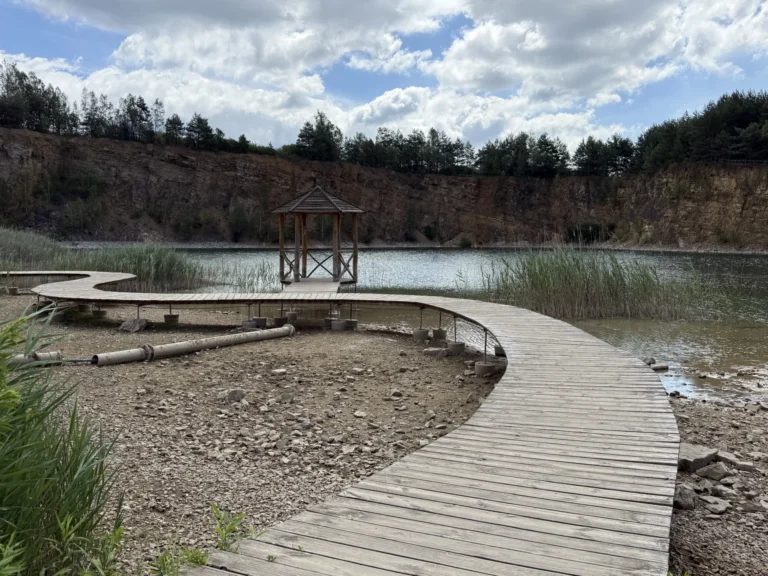
We open the map of the world; a week’s holiday isn’t very long to head beyond the borders of our home patch. We circle around European countries, but during covid (May/June 2021) it was far too demanding to waste time on bureaucracy in exchange for a few days spent in, say, Madeira as we’d planned.
Karel, originally from Vimperk – the sharper among you won’t have missed the town of Vimperk’s demagogic campaign, as I like to say with a smile, that it’s the notional gateway to Šumava – suggested we could cross Šumava. And more than that… we’d do the Šumava crossing in 3 days! I was against it at first, because Zdenička and I wanted to do this trek together, but there really wasn’t another option. One word led to another and a few days later we were standing at the station again, just as we had when setting off on our first joint journey to New Zealand. This time with lighter packs, a stack of beers and a hat on our heads.
Swallowing the first kilometres of the Šumava crossing
The journey with Czech Railways, almost 4 hours long, ends at the picturesque stop of Hojsova Stráž in the middle of nowhere in the Plzeň region. The walk begins. The train journey itself is magical, because the line skirts the peripheries of both regions and ends, for us passengers, in a forest where there’s nothing. The first kilometres don’t go down easily, possibly also because of that ham sandwich at Klatovy station, which was fighting its way back upstream.

On the yellow trail nicely past Černé jezero, across the ridge trail to the second lake, this time Čertovo. Over the hill into Železná Ruda, where bodies and heads start making it clear they aren’t going any further.
But… enough of robbing you of your own experience.
Where does the Šumava crossing start and end?
There’s no way to specify an exact start and finish, but you can start at the boundary of Šumava National Park in Železná Ruda, or conversely start in Nová Pec, or at the park’s southern boundary in Zadní Zvonková. If you plan to sleep at the emergency campsites, we’d recommend the route from Nýrsko, or a short way beyond Nýrsko, which you can reach from Klatovy by express train. We started a few kilometres from the Nýrsko reservoir – Hojsova Stráž.

The walk took us 3 days. We’d expected four, but the weather and our appetite for walking drove us forward in giant strides. You can see the detailed route below.
We’d recommend walking the whole route and sleeping at the emergency campsites. It’s a beautiful experience. Sleeping in the wild, enjoying the calm, the sunsets and the beautiful night skies. And if you make yourself a good sandwich or heat up an instant noodle soup on top of that, you launch the experience into the stratosphere.
A map of the 3-day Šumava crossing, the way we walked it
What to take on the Šumava crossing
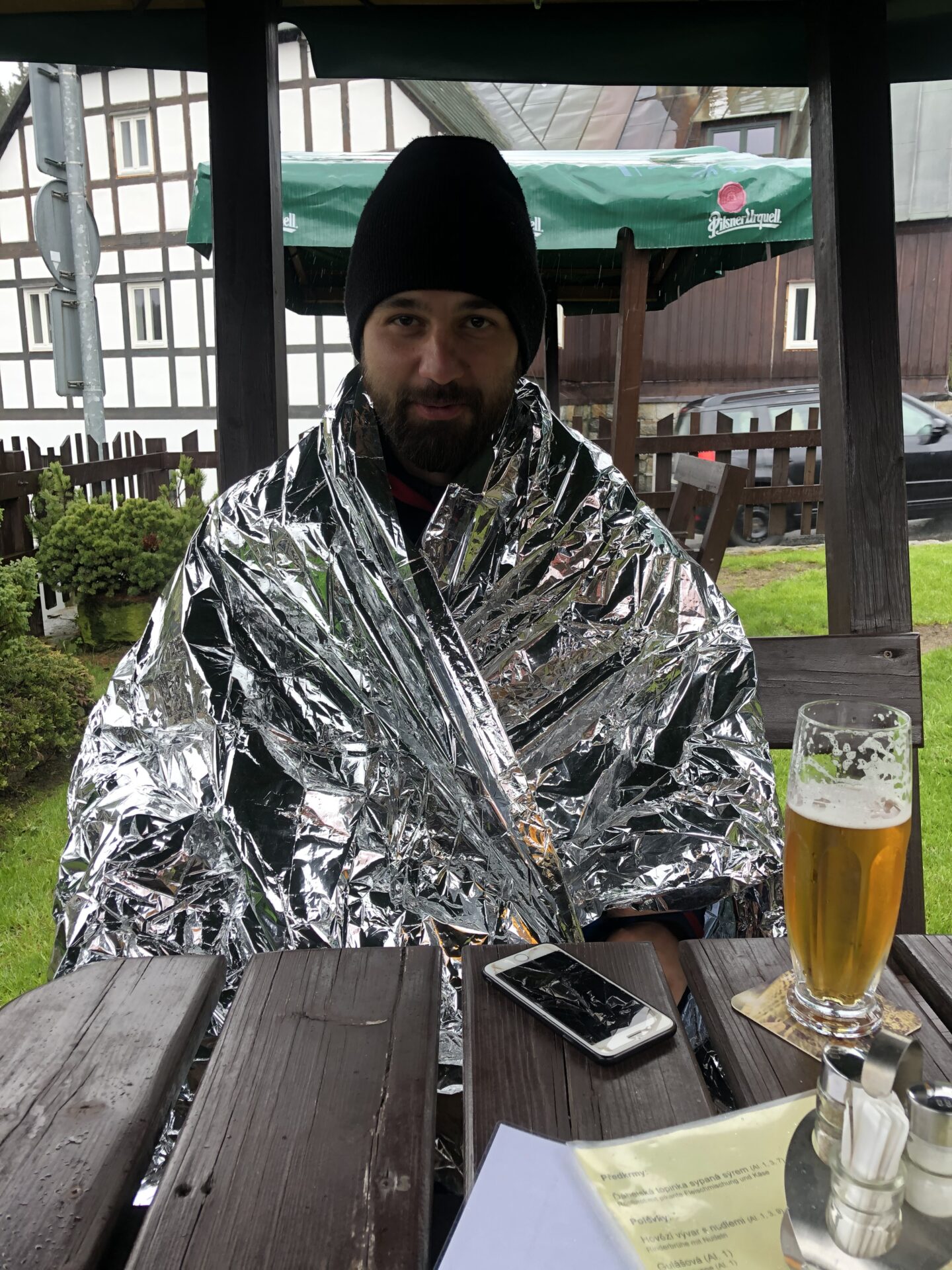
It’s an individual matter underlined by the current weather and the season in which you set off. Don’t be fooled. Wherever you’re from, the weather in Šumava is different from everywhere around it. Changeable is the right word. In the last week of May you’d expect purely summer weather, but sadly not. It rained a lot, it was windy, and when the sun peeked out here and there we were grateful.

You regularly pass through parts of Šumava where there’s civilisation. If you don’t insist on carrying everything on your back from start to finish, you don’t have to buy that much food. Essentially you’re going to enjoy this crossing, not suffer through it.
Clothing depends on the season and the forecast; in the evening in particular you may be surprised by the temperatures Šumava reaches. Besides thermals, hats, gloves and ponchos, our packs held a compact gas burner with a spare canister, cookware and cutlery, a sleeping bag, a tent, a power bank, a sleeping mat and a speaker. No useless extras like when Zdenička and I walked to Santiago, but that’s another story.
Interlude: Karel, why do we actually do this?
Friendship should be tended and sharpened. You can go for a beer with your mates, play some sport together, go to work together and discuss your partners, or, in our case, walk. On a walk like that we combine the useful with the pleasant. On one hand we both like quiet and can accommodate each other by simply shutting up. On the other we have plenty of time to talk everything through in depth without being limited by time. Just walking. Genius.

An idyllic moment of our friendship could be captured by a model scene where we sit on a rock at an emergency campsite, watch a burning fire, tell each other stories, drink and go to sleep like human beings. Sadly life isn’t like that. Because at the turn of May and June it was 0 °C in the evening, because the wind was blowing and it was miserable, but because we didn’t care at all, we had our idyllic moment anyway – in the tent.
Emergency campsites in Šumava
Šumava is one of the few national parks in Czechia that lets walkers spend the night at emergency campsites. For me it’s a great idea, one built on personal responsibility. If a walker has it, everything works. If everyone leaves a mess at the campsites and doesn’t clear up after themselves, we can expect this option to end one day.
The park administration neatly prevents walkers spending the night outside designated areas, destroying flora and harming nature in other ways.
We’ve written more about the emergency campsites in Šumava in this article: Emergency campsites in Šumava
Accommodation along the way, away from the campsites
The rule is that in a national park you shouldn’t sleep outside designated places. In many parts of Šumava National Park there are protection zones for rare animal and plant species, and sleeping outside designated spots could scare or damage them.
There is a solution, and it isn’t sleeping standing up. You can simply take the route of the crossing and set yourself checkpoints you have to reach. At those places you’ll find plenty of guesthouses, small hotels or Airbnb flats. You’ll certainly find accommodation in Železná Ruda, Prášily, Modrava, Kvilda, Strážný and so on. I’d look mainly at Booking or Airbnb.
📌 Are you getting ready for your next adventure? Don’t waste time searching for information. Create your own itinerary with Karel 2.0, a tool that will plan and recommend places tailored to your schedule and the area you’ve selected. 🙂 Let’s try it
Crossing Šumava off tarmac? Yes and no
Both. Do your knees or ankles bother you? Unfortunately you won’t avoid tarmac, especially if you follow the marked trail. Because Šumava was largely closed off for military purposes in the past, tarmac and hard-surfaced roads were built for moving military equipment. There’s a lot of tarmac from Železná Ruda to Prášily and from Poledník to Modrava. The rest of the route is more on hard-surfaced tracks.
So if your knees give you trouble, don’t take a heavy pack and bring some medicine. Ideally slivovice, or perhaps painkillers.
Highlights of the crossing
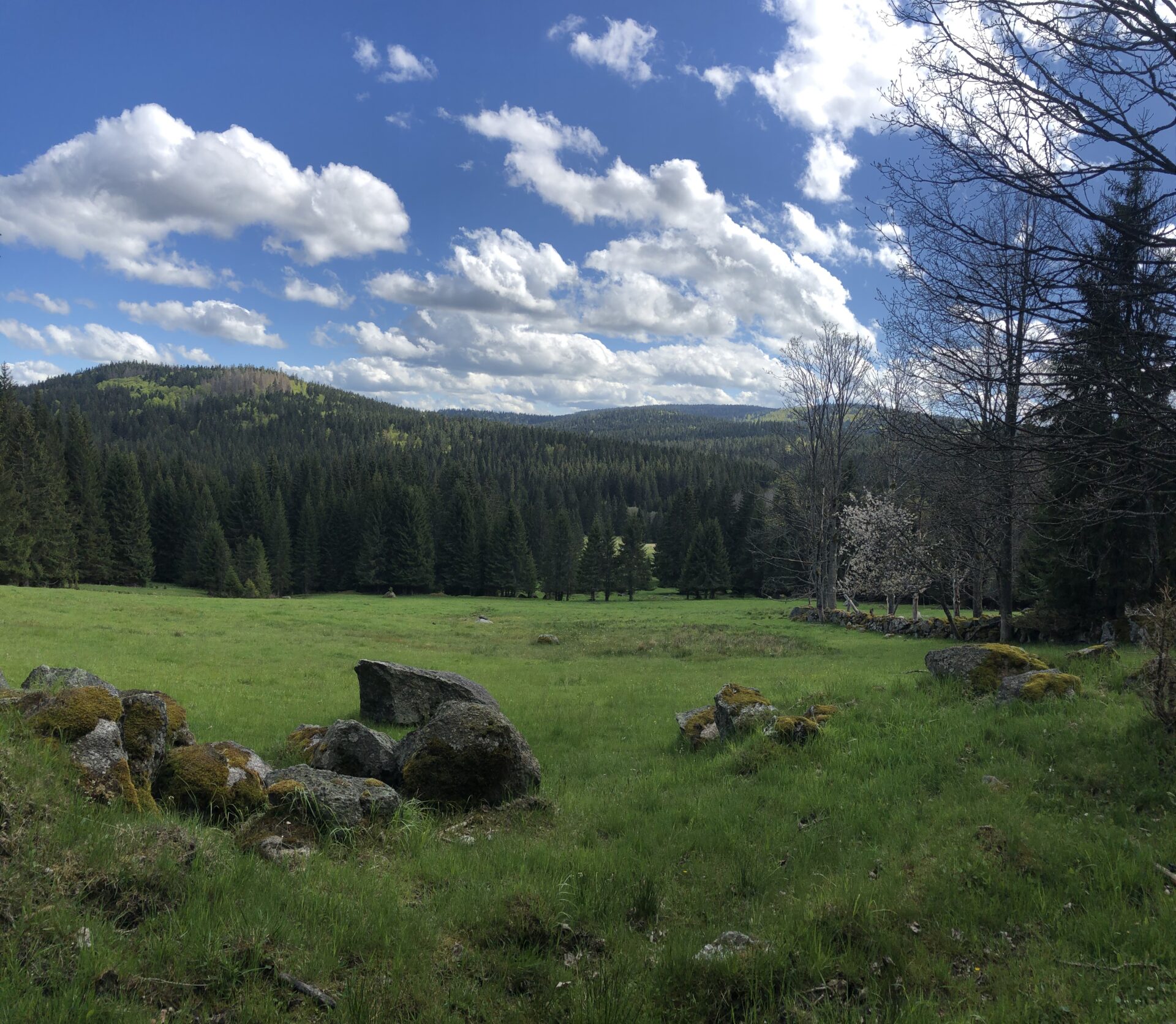
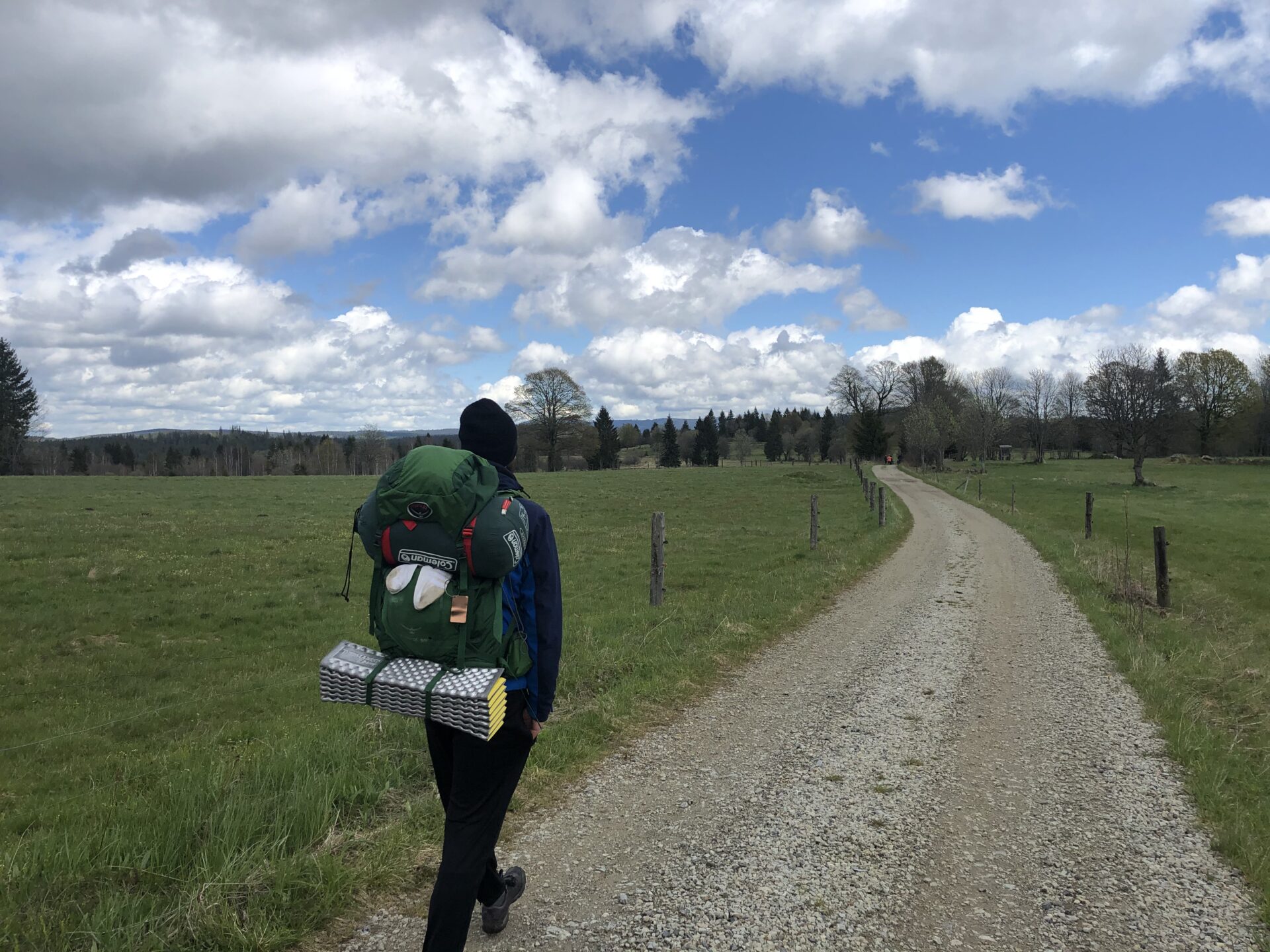
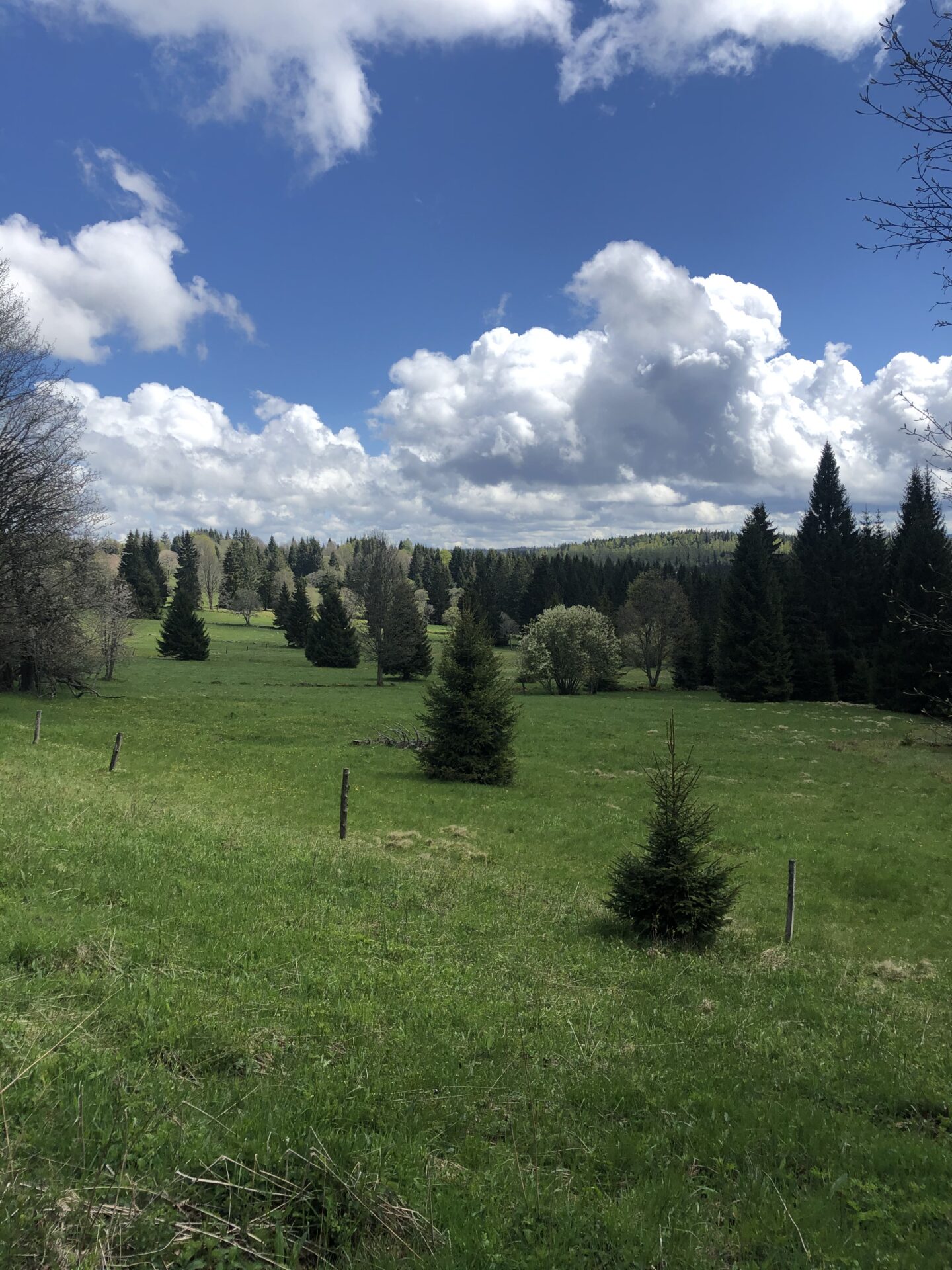
You’re probably most interested in what you’ll see along the way. It seems almost a shame to rob you of your own experiences, but we’re adding a few below as a small taster so you know how magical Šumava is. After all, why would you go to Vysočina when you can go to Šumava 🙂

Simple rules anyone can remember
In Šumava you’re the guest, and guests behave decently. What you bring in, you take out. Does the silence around you bother you? Then above all don’t shout, you aren’t alone in this park. But do you really need the loo? Sorry about that, but try to hold on until a checkpoint – there’s always a toilet there. (Having seen how, if you’ll pardon me, befouled the bushes around the Silesian hut are, it makes me sad.) Do you really have to light that fire? Try bringing more clothes, or going without the sausages. Fancy wandering off the trail? Then be careful, so somebody can find you if it comes to it – that’s what the trails are there for.
We’d love it if you shared your experiences of the Šumava crossing with us. We’ll happily add some of the information, discuss how divine Šumava is, and together we can even unpick the question of whether Vimperk really is the gateway to Šumava or not.